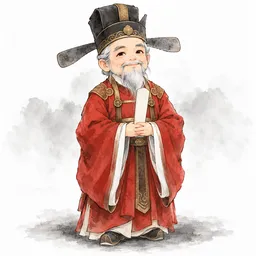
In xiangqi, the advisor moves one point diagonally and must stay inside the palace — it can never step outside. Red writes 仕 and Black writes 士; each side has two. It can't go far and can't cross the river: all game long it stays by the general's side as the closest of bodyguards.
 仕
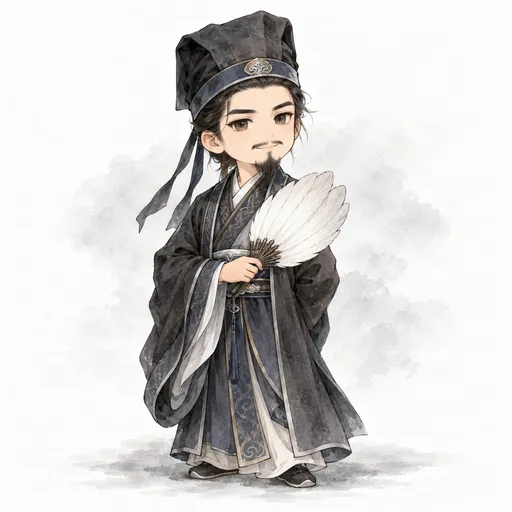 士
Names and origin
Red writes 仕 and Black writes 士 (both shì); the moves are identical, and the characters differ only so you can tell the sides apart. In English the piece is usually called the Advisor or the Guard — one is the man who gives counsel, the other the personal bodyguard, and between them they capture both sides of the role.
Xiangqi pieces are arranged like an ancient army: the commander sits in his tent at the heart of the camp, with his aides and guards around him, so the advisors are confined to the palace, right next to the general. One account says the palace represents the commander's tent, and the advisors are the only pieces allowed inside with him.
How it moves: one point diagonally in the palace
An advisor moves one point diagonally each turn, and only along the diagonal lines inside the palace. The palace is a 3×3 box with two diagonals, so the advisor can only ever stand on the five points those lines pass through: the four corners and the centre.
From the centre an advisor has four moves; from a corner it has just one — back to the centre:
How the advisor captures
If an enemy piece stands on a point the advisor can reach, the advisor may capture it. Enemy horses, chariots and soldiers often invade the palace looking for the general, and the advisors are the first line of defence.
Raising and lowering advisors
Players talk about raising an advisor (撐士, also 上士) — moving it from the back rank up to the centre of the palace — and lowering it (落士), moving it back down. Both have their uses:
- Raising: an advisor in the centre covers all four corners, adding a layer of protection around the general. Very common in the opening.
- Lowering: moving the advisor back to the back rank frees the centre of the palace so the general can move up or sideways without being blocked by its own piece.
Having both advisors and both elephants is called full advisors and elephants (士象全), the most complete defensive formation. In the endgame, a side with full advisors and elephants often can't be broken by a single chariot.
Advisors can smother their own general
Advisors guard the general, but in the wrong places they block the general's own escape. In the position below, both black advisors have stayed on the back rank, trapping the general between them:
This kind of mate, where a side is smothered by its own pieces, is the most typical horse mate (see more on the horse page). So when you defend, remember to raise an advisor when needed and leave your general a way out.
Its value: without advisors, fear the double chariot
An advisor is worth about 2 points, about the same as an elephant. It can't attack, so its score is low, but without advisors the general becomes very vulnerable. Players say "without advisors, fear the double chariot" (缺士怕雙車): once the advisors are gone, two enemy chariots can mate easily.
With both advisors still in place, the attacker needs many more moves to break through. So in the middlegame, don't casually trade an advisor for a soldier.
Frequently asked questions
Can the advisor leave the palace?
No. The advisor moves only between the five points of the palace, diagonally, and can never step outside — let alone cross the river.
Can the advisor move straight?
No, the advisor only moves one point diagonally. The piece that moves straight (up, down, left and right) inside the palace is the general.
What is the difference between 仕 and 士?
Only the character: Red writes 仕 and Black writes 士. They move in exactly the same way.
If my advisors are captured, have I lost?
No. The game goes on as long as your general isn't checkmated. But without advisors your general is much easier to attack, so play more carefully.
Is it better to raise or lower an advisor?
It depends on the position. While the opponent's pieces are still far away, raising is the safer choice; when your general needs room to move, lower an advisor to clear the way.
Try it yourself
The best practice is to play a game and watch whether your advisors ever block your general's path. Play xiangqi online against the computer — when you select an advisor, only the legal points inside the palace light up. To see the other pieces, go back to Xiangqi pieces; to start from the beginning, visit the xiangqi home page.